Gate repair in Santa Clarita
A leaf that sags, a gate that drags, an opener that quits halfway.
Swing or slide, manual or electric, steel or iron. Say what the gate is doing and we hand it to one licensed installer, who looks at it and puts the fix in writing.
This site makes the connection. The repair is quoted and done by the installer.
When a swing gate sags or drags
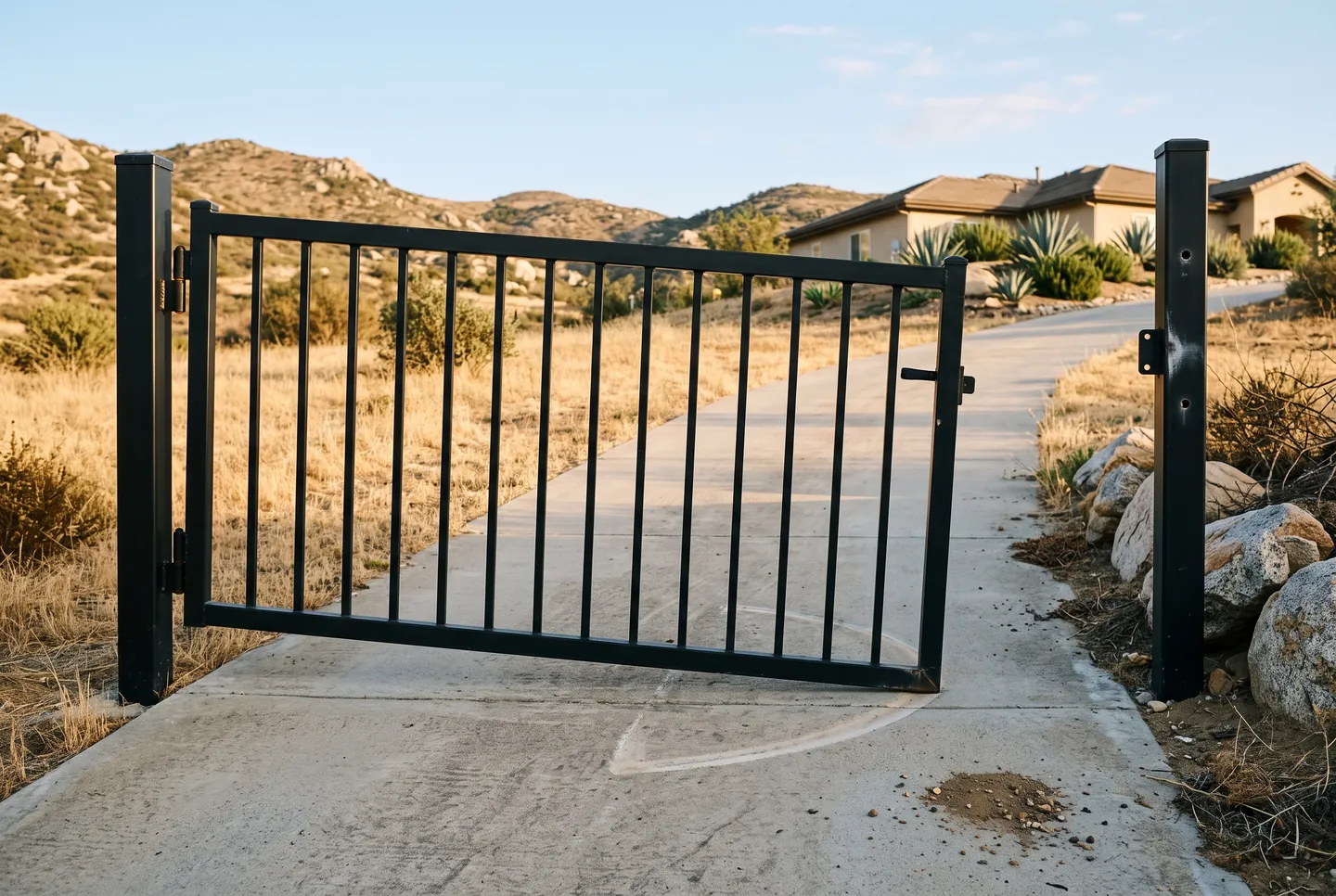
A swing leaf hangs off one side, so most trouble starts at the hinge end and shows up at the latch end. On a sloped Santa Clarita drive, even a small drop is enough to put the bottom rail on the concrete.
- Hinges. Worn or loose hinges let the free end of the leaf fall.
- Hinge post. A post that leans or has shifted in its footing takes the whole leaf with it.
- Latch. Once the leaf drops, the latch stops meeting its keeper.
- Bottom rail. The first thing to scrape on a drive that rises.
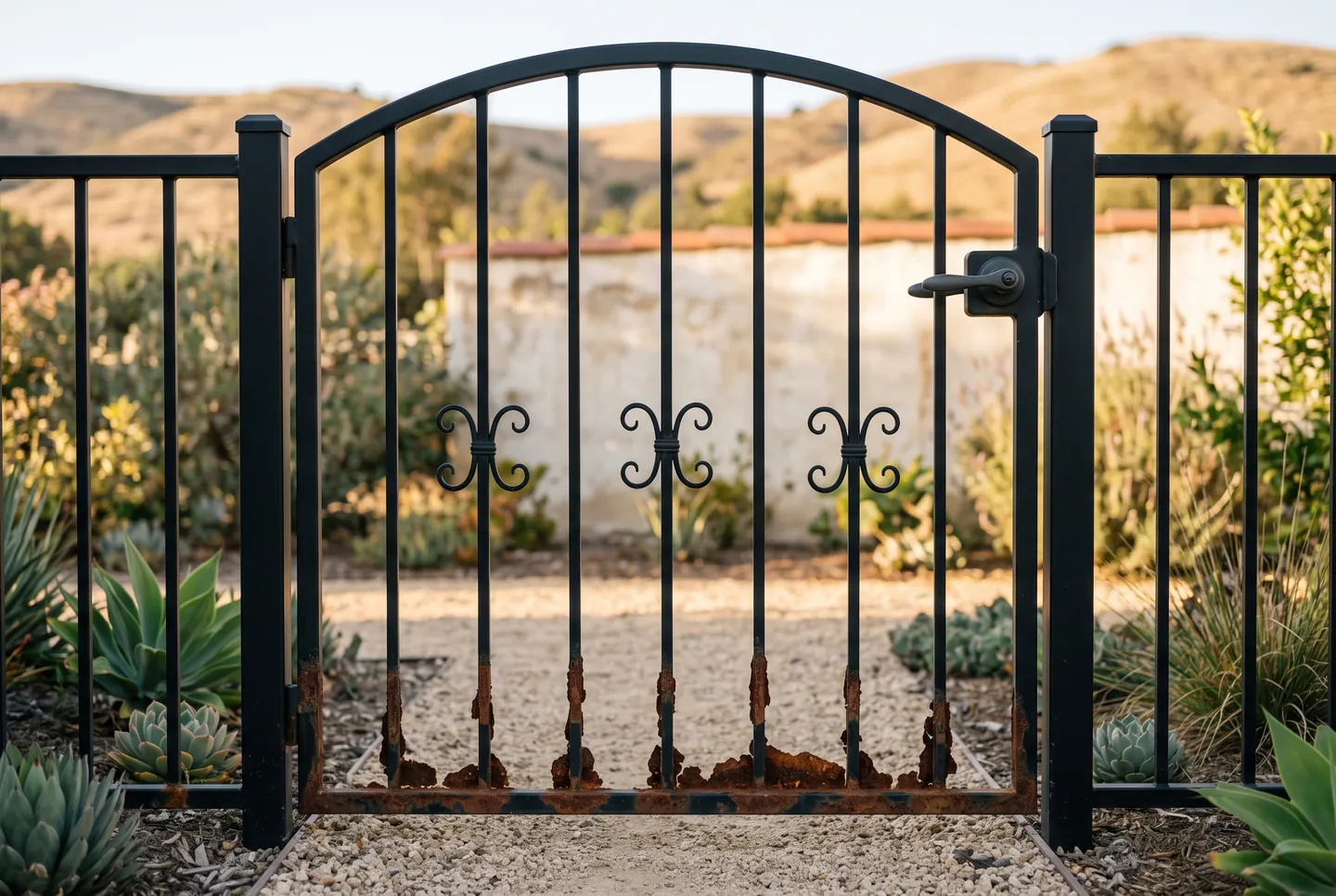
- Rust. Mild steel, which most "wrought iron" is, rusts more readily than old iron, and rust at a joint or hinge mount weakens the leaf.
 Rendering
Gate opener repair
When an electric gate stops, the motor is only one suspect. The usual list:
- Safety sensors. Photo eyes that are dirty, blocked or knocked out of line will stop or reverse most openers.
- Wheels and track. On a slide gate, debris or a worn wheel makes the operator strain and trip.
- The opener. Power, the backup battery or the control board. A backup battery ages and holds less charge over time.
- Remotes and keypad. A dead remote battery or lost programming can look like a broken opener.
Leave the safety sensors to the installer. UL 325 bars any change in the field that bypasses or defeats their monitoring (DASMA TDS 353). More on openers on the electric gates page.
Repair it or replace it?
Price the fix before pricing a new gate. Worn hinges, wheels or a latch are parts swaps; a bent frame or a cracked joint means welding. For openers, DASMA recommends replacing any made before 2000, which may not accept the safety devices required since then, and notes that UL 325 does not force an upgrade of an opener already installed (TDS 356).
 Rendering
When the fix means digging
Resetting or replacing a post is new digging. Within an oak's protected zone, a house lot needs an oak tree permit for the inner half only, not the outer (17.51.040). A new line voltage circuit for a replacement opener is not on the city's building permit exemption list, so expect an electrical permit for that part (SCMC 18.02.030). A straight swap of hinges, wheels or a latch is not digging at all.
What sets the price of a gate repair
We found no government, trade or university source that prices gate repair here, so there is no range on this page. The bill mostly follows the fault.
- Parts swap or welding
- Hinges, wheels, rollers and latches are swapped. A bent frame or a cracked joint is cut and welded, then refinished.
- A post that moved
- Resetting a post is new digging. In the inner half of an oak's protected zone that needs an oak tree permit (17.51.040).
- Opener faults
- The cause can be a sensor, a battery, the control board or the motor. Finding which comes first, and the answer sets the bill.
- Opener age
- DASMA recommends replacing any opener made before 2000, since it may not accept current safety devices (TDS 356).
- New wiring
- Running fresh line voltage power to an opener is missing from the work Santa Clarita lets you do without a permit, so plan on an electrical one (SCMC 18.02.030).
A short video of the gate opening and closing tells the installer more than a description.
Tell us about your gateGate repair questions
How much does gate repair cost in Santa Clarita?
No neutral source we found prices gate repair in Santa Clarita, so this page does not quote one. The bill mostly follows the fault: a hinge, wheel or latch is a parts swap, a bent frame is welding, and a leaning post is new digging, which near an oak can add a permit question (17.51.040). For an opener, the fix can be as small as a sensor or a battery, so a video of the gate running helps the installer quote it.
How do you fix a sagging gate?
Find what moved first. If the hinges are worn or loose, tightening or replacing them lifts the leaf back. If the post leans, it has to be straightened and reset in its footing. A frame that has bent or cracked at a joint needs welding. Re-leveling the leaf is the last step, so the latch meets again and the bottom rail clears the drive.
Can wrought iron gates be repaired?
Yes. Bent or cracked parts are cut out or welded, and rust is cleaned back to sound metal and recoated. See the iron gates page for finishes.
Why does my gate opener stop halfway?
Usually because it thinks something is in the way. Check the photo eyes for dirt, spider webs or a bump that knocked them out of line, and look for debris on a slide gate's track. A weak backup battery or a gate that has started to bind can also make the opener quit. If it keeps happening, have it looked at rather than forcing the gate.
What can I check before calling?
For an electric gate: that the opener has power, that nothing sits between the photo eyes, that the eyes are clean and facing each other, and that the track of a slide gate is clear. Try a second remote or the keypad to rule out a dead remote battery. For a swing gate: open it by hand and watch the hinges and the hinge post. If the post moves, or the leaf lifts and drops at the hinge, that is where the fix starts. Leave anything electrical inside the opener to the installer.
How long does a gate opener last?
There is no single figure from a neutral source. Heavy daily use, strong sun and dusty tracks wear an opener faster, and regular care slows that down. The one firm cutoff comes from the gate operator makers' association: an opener built before 2000 should be replaced, because it may have no way to hook up the safety sensors the standard has called for since then. A newer one does not have to be upgraded just because the standard changed (DASMA TDS 356).